


A Nutrition Science Student's Take on The New Dietary Guidelines for Americans
By Tyler Morris • January 26, 2026
Contradictions, politicized framing, the myth of the "failed" guidelines, and the appeal to nature fallacy
*This written piece is the author’s personal opinion, not that of anyone else, and does not represent the views of Advocates for Science @ IU (ASIU) or Concerned Scientists @ IU (CSIU). This piece is also not a comprehensive review of the topic discussed.
Introduction
The release of the 2025-2030 Dietary Guidelines for Americans (DGA), with the call to “Eat Real Food,” has triggered a predictable wave of online celebration and outrage. Wellness influencers, self-proclaimed nutrition experts, and supporters of Robert F. Kennedy Jr.’s “Make America Healthy Again” (MAHA) movement are calling the new guidelines a “common sense update,” a “historic update,” and a “return to the basics.” Official White House, Health and Human Services (HHS), and United States Department of Agriculture (USDA) messaging has echoed this framing, including claims that the new guidelines are “ending the war on protein” and saturated fat.
But much of what is being marketed as a historic update is not new. Prior DGAs already emphasized nutrient-dense dietary patterns centered on fruits and vegetables, whole grains, and lean proteins from both animal and plant sources, while recommending limits on nutrients of concern like added sugars, saturated fat, and sodium. What changed? The rhetorical framing, the return to a food pyramid, and the degree to which the final policy document appears to diverge from the independent scientific review process that traditionally underpins the DGAs.
History of the Dietary Guidelines for Americans and What They Are
To better understand the controversy surrounding the 2025 release, it is helpful to first understand what the DGAs actually are, and what they are not. "The Dietary Guidelines was first released in 1980. In 1990, Congress passed the National Nutrition Monitoring and Related Research Act, which mandated that the Dietary Guidelines be published jointly by the US Department of Agriculture (USDA) and the Department of Health and Human Services (HHS) every five years”. Their purpose is to provide science-based advice on what to eat to promote health, meet nutrient needs, and reduce the risk of chronic disease. These guidelines form the basis of federal nutrition policy, influencing everything from school lunch programs to the Special Supplemental Nutrition Program for Woman, Infants, and Children (WIC) and the Supplemental Nutrition Assistance Program (SNAP).
The visual representation of these guidelines has evolved significantly over the decades (see figure below) – a fact often ignored by current critics – and has always been controversial. The 1992 Food Pyramid recommendations are still similar to what more recent DGAs have recommended. However, it is sometimes critiqued by the nutrition community for not differentiating whole vs. refined grains. In 2005, MyPyramid was released with the aim of simplifying the illustration while continuing the “pyramid” concept. However, it was largely considered too complex and confusing. It also added a staircase with a walking figure to promote physical activity. Then in 2011, MyPlate was released after the 2010 DGAs as a completely redesigned consumer visual. So, despite current federal messaging, the very controversial 1992 Pyramid was retired in 2005, and Pyramids were gone altogether in 2011 with the introduction of MyPlate. Therefore, the US government has not used a food pyramid for 15 years. The decision to release a new, inverted pyramid with a focus on animal proteins and fats, is largely (in my opinion) a political satire of the 1992 graphic.
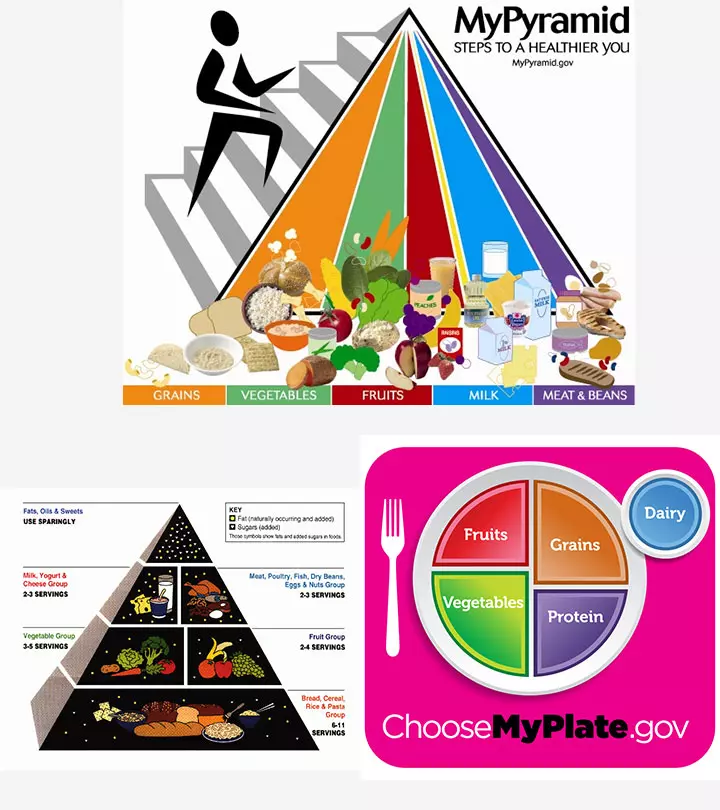
Over time, the DGA process has moved toward greater rigor and transparency, especially in more recent iterations (in part in response to this report), with increased use of systematic evidence reviews and public documentation. Earlier iterations relied more heavily on expert opinion and were less systematic and rigorous. However, the process appears to have regressed with the latest version, as many of the efforts intended to strengthen rigor and transparency were not implemented in the most recent cycle.
The process typically begins with the selection of an independent Dietary Guidelines Advisory Committee (DGAC) – a group of nationally recognized nutrition scientists. This committee spends a couple of years reviewing the latest scientific literature to produce a comprehensive report. The USDA and HHS then use this report to draft the policy document – the DGAs. However, the 2025 guidelines represent a stark break from this norm. For the first time, the administration largely discarded the independent DGAC’s report – which had been finalized in late 2024 – and instead relied on a non-transparent internal review process. This deviation is what sparked an alarm among many nutrition professionals and professional organizations. I’ll come back to the specifics of what we know about that alternative review process, including transparency concerns and potential conflicts of interest, in the “Organizational Responses and the Importance of Process Transparency” section.
Finally, we also measure how well Americans follow these guidelines using the Healthy Eating Index (HEI), which uses a scoring system ranging from 0 to 100, and is based on 13 components reflecting the recommendations in the guidelines. The HEI was originally developed in 1995 and is updated after each new edition of the DGAs. The HEI-2020, based on the 2020-2025 DGAs (the HEI has not been updated yet for the 2025-2030 DGAs), shows that the average American scores a 58 out of 100, with some small differences among age groups and race. The pervasive narrative from some that Americans are “sick” simply because of past DGAs is categorically and empirically false – Americans on average are simply not close to eating what is recommended by the DGAs.
The New 2025-2030 DGAs – What was Released
A 10-page consumer-friendly DGA, a 90-page Scientific Report (controversially replacing the 2025 Dietary Guidelines Advisory Committee Report released in 2024), and a 418-page appendix were all released. Some key changes in the new guidelines compared to the last version include:
- A push for higher protein targets (1.2 to 1.6 g/kg/day compared to the Recommended Dietary Allowance of 0.8 g/kg/day)
- Continued recommendations to prioritize nutrient-dense foods and to limit added sugars, but with stronger messaging to explicitly limit and avoid “highly processed” foods such as refined grains
- Continued retention of the long-standing saturated fat cap (<10% of daily calories) while paradoxically including messaging and visuals that elevate animal-based proteins and fat sources that are often higher in saturated fat
- Removal of quantitative alcohol limits in favor of vague “drink less” language
The emphasis on nutrient-dense, minimally processed foods while continuing to recommend limiting sodium and added sugar is great and broadly consistent with prior DGAs. Notably, the guidelines use the vague term “highly processed” without a clear operational definition. That ambiguity matters because “highly processed” is not the same as “ultra-processed” as used in frameworks like the NOVA system, and these classification systems are still debated and inconsistently applied. Also, I briefly discussed why black-and-white “ultra-processed = bad” framing breaks down in practice, including cases where processed foods can be useful or health-promoting, here.
The push for higher protein intakes is fine, in my opinion. The majority of Americans likely already consume enough protein at ~ 1.0 to 1.2 g/kg/day. Yes, athletes and those who are physically active (especially those engaging in resistance training) can benefit from intakes of ~ 1.2 to 1.8 g/kg/day, but this isn’t most Americans. And I worry that recommending more protein while visually highlighting more animal sources of protein in the new Pyramid will lead to greater saturated fat intakes, confusing consumers when compared to the laudable saturated fat cap (<10% of daily calories).
I disagree with alcohol guidance shifting from quantitative limits to vaguer “drink less” language, as this reduces clarity where it matters. This is especially surprising given the fact that many of the current administration’s health agency leaders have engaged with the wellness influencer fear-based rhetoric around “toxins” and chemical additives in food. Alcohol is a known carcinogen in humans and is linked to several specific cancers, so replacing clear quantitative limits with vague “drink less” language reduces clarity where it matters. The marketing-style framing (“Eat Real Food,” “we’ve been misled”) and the reintroduction of a pyramid-style visual are likely to be interpreted as a sharp break from prior science, even when the core message is the same (minus the moralistic framing around food).
The Inverted Food Pyramid
Visually, these recommendations have been packaged into a new inverted food pyramid – a graphic that pokes fun at the discontinued 1992 pyramid – that places relatively large images of red meat, full-fat dairy, and other products high in saturated fat near the heavy top left, with smaller images of plant proteins (only a couple nuts vs. slabs of meat), signaling a stark but intentional departure from the plant-forward era. It is also worth noting that elevating red meat and full-fat dairy is not only a nutritional concern, but an environmental one as well. Dietary patterns higher in animal-based foods (especially red meat) generally carry higher greenhouse gas emissions and land and water use than more plant-based patterns higher in fruits, vegetables, grains, legumes, and plant-based proteins. Some critics argue that the new pyramid, and accompanying USDA and HHS messaging, align with beef and dairy industry interests.
Whole grains also receive a small section near the bottom tip, suggesting they should be consumed less, even though the written document recommends two to four daily servings. This matters because visuals often communicate priorities more strongly than text for the average consumer (i.e., most people don’t read the written guidelines). In the next section, I give special attention to the messaging tactics that resemble the playbook of modern wellness misinformation and pseudoscience.
The “You’ve Been Lied To” Framing and the Shift Toward Grievance Politics
Federal health leaders have paired the DGA rollout with rhetoric that implies the public has been deceived for decades, and that current leadership is finally uncovering the truth. For example, Dr. Makary (FDA) said, “We are setting the record straight, telling people the truth about food,” and “For decades, we’ve been fed a corrupt food pyramid that has had a myopic focus on demonizing natural healthy saturated fats, telling you not to eat eggs and steak, and ignoring a giant blind spot: refined carbohydrates, added sugars, ultra-processed food”. And, Kennedy said, “our government has been lying to us”. None of these claims are true. It also shouldn’t be a surprise that the actual DGA document, and some of the supporting documents (e.g., DGA fact sheet), are filled with this sensationalized and politicized rhetoric. For example, the new DGAs website says, “For decades we’ve been misled by guidance that prioritized highly processed food, and are now facing rates of unprecedented chronic disease,” while disingenuously displaying the 1992 Food Pyramid. Again, the Food Pyramid has not been the consumer visual for 15 years: the federal government moved on from the controversial 1992 Pyramid to MyPyramid in 2005 and then to MyPlate in 2011. Misinformation spreaders often use a grain of truth (e.g., we have a chronic disease issue) to spread inaccurate claims (“prior guidance prioritized highly processed food”) that fit their narrative, as I’ve written about here regarding nutrition misinformation.
This framing primes readers to interpret the past guidance through distrust, and it implicitly suggests that prior evidence-based guidance promoted unhealthy dietary patterns. That implication is misleading. And to be clear, even though I roll my eyes at the moralistic (bad vs. good), naturalistic (real/natural vs. fake/artificial), and chemophobic framing of food (chemophobia is the irrational fear of chemicals, typically of synthetic nature), I do understand the core message they are trying to get across. For many people, “real food” is shorthand for whole, nutrient-dense, minimally processed foods, and I 100% agree that dietary patterns should be largely built around these foods. That has been a broad consensus in nutrition for decades and is consistent with what prior DGAs have recommended. My main concern is that this type of moralistic framing may lead to disordered patterns of eating, or even worse, full-blown eating disorders. It seems that this administration, which is known for using strong language aimed at discrediting previous administrations, is trying to do the same with nutrition to “force” people to eat healthily. However, that’s just not how things typically work.
The “truth-teller” framing used is a common persuasion tactic in misinformation ecosystems because it positions the public as victims of a vague, corrupt “they” and elevates current leaders as the only reliable source of “the truth,” which predictably increases receptivity to conspiratorial thinking and oversimplified narratives. In nutrition, this often shows up as the appeal to nature fallacy and chemophobia: terms like “real,” “natural,” and “chemical-free” are not scientific or regulated terms, and they do not map cleanly onto health outcomes, yet they strongly imply purity and safety. The result is often a shift toward black-and-white thinking that encourages people to focus on minor “villains” (seed oils, additives, ingredients they can’t pronounce, etc.) rather than focusing on sustainable dietary patterns and the real constraints that shape daily choices, like cost, access, time, and the food environment.
Organizational Responses and the Importance of Process Transparency
Several organizations have issued statements that range from neutral to supportive, while others have publicly criticized both the content and the process. The Center for Science in the Public Interest (CSPI), for example, argues that the final DGAs significantly departed from the independent advisory committee’s scientific report. They even released an “Uncompromised DGA” to illustrate what the guidelines could have looked like if they had followed the evidence-based recommendations from the 2025 Dietary Guidelines Advisory Committee (DGAC) Report (finalized in 2024). The DGAC Report is meant to inform the HHS and USDA when drafting the DGAs. However, “the Secretaries dismissed this two-year scientific review led by 20 independent nutrition experts, in collaboration with federal scientists, and informed by thousands of public comments and seven public meetings, all because it incorporated health equity and, they allege, ‘ideological bias, institutional conflicts, or predetermined conclusions.’” Instead, a “supplemental scientific analysis” (which resulted in the 90-page Scientific Report) was conducted by individuals selected through a federal contracting process. And even though the report states that “evidence was evaluated based solely on scientific rigor,” some have raised concerns about the lack of transparency in the methods that were used. Others have also pointed out the reviewers’ financial ties to the beef and dairy industries, which, to their credit, are listed in the 90-page Scientific Report.
Additionally, statements and articles from the American Society for Nutrition (ASN), the Academy of Nutrition and Dietetics (AND), the University of Michigan nutrition and health professionals, the Obesity Society, the Harvard T.H. Chan School of Public Health, and the Stanford Medicine Nutrition Studies Research Group note the positives, but also address concerns where the guidelines diverge from the highest-quality evidence. Christopher Gardner, PhD, who was on the 2025 DGAC, released a video to his Instagram page discussing the new DGAs and his work on the DGAC Report that was ignored by the current admin in their making of the 2025-2030 DGAs. Part of his caption states, “After two years serving on the Dietary Guidelines Advisory Committee, it’s troubling to see rigorous, transparent science sidelined, especially when health equity was treated as a reason to dismiss evidence rather than have it be a core part of public health.” We often hear RFK Jr. mention that he is using "radical transparency" and restoring “gold-standard science," but what he really means by this is cherry-picked evidence that supports his own predetermined misbeliefs. This is very clear from his history and his current role as HHS Secretary.
There has also been a lot of mixed discourse on LinkedIn, X, Instagram, Facebook, and other social media platforms from nutrition professionals. Here are two Substack articles I highly recommend from Kevin Klatt, PhD, RD and Jessica Knurick, PhD, RD.
As a nutrition science student, it is frustrating to not see a relatively clear consensus on the new guidelines from nutrition professionals. However, as Dr. Klatt mentions in his Substack, there are many ambiguities in the guidelines, so different interpretations aren’t too surprising. Additionally, nutrition science is inherently “messy” and rarely offers the black-and-white certainty of pharmaceutical research. Unlike drug trials, where variables can be tightly controlled, nutrition data relies heavily on observational epidemiology – tracking what people eat over long periods of time. While valuable, this data is prone to confounding factors, such as physical activity, overall lifestyle, socioeconomic status, and self-reported data. We cannot lock thousands of people in a metabolic ward for 20 years to conduct the kind of rigorous, randomized controlled research that would suggest cause-and-effect (such studies are logistically impossible due to funding constraints, adherence issues, and ethical feasibility). Consequently, when some folks demand “drug-trial level” evidence for dietary advice, they create an impossible standard that can be selectively used to dismiss inconvenient truths while promoting favored narratives.
Public Awareness, Adherence, and the Myth of “Failed Guidelines
A large share of the public discourse on social media assumes Americans have been following the DGAs closely and that the DGAs themselves are the primary cause of poor nutrition-related health outcomes (e.g., heart disease, obesity, and diabetes). However, that view is hard to reconcile with basic awareness and adherence data. For example, only about one-quarter of U.S. adults had even heard of MyPlate (the consumer-friendly graphic released alongside the DGAs in 2011, replacing MyPyramid) according to an NHANES 2017-2020 prepandemic survey. And, as mentioned above, diet quality data (HEI scores) suggests that most Americans are not closely following the DGAs. Additionally, CDC small-area analyses show that chronic disease “hot spots” cluster heavily in the Southeast, and the highest-burden communities also face greater socioeconomic disadvantage and barriers to healthcare access, which points to structural drivers that the DGAs, which Americans do not closely follow, are unlikely to explain on their own.
This context matters when federal health leadership, public figures, and social media health influencers frame the 2025-2030 DGAs as a dramatic correction to years of poor guidance, even though most of the celebrated elements of the new DGAs are a continuation of prior guidelines. Online reactions are also shaped by numerous social factors and who is most motivated to post: highly engaged contrarian health communities, wellness influencers, and political audiences, all of whom will predictably filter and interpret information through their prior beliefs, experiences, and identities. While social media is not a representative sample of public understanding, it is still upsetting to see even credentialed professionals repeating the “historic update” narrative without clarifying what is actually new. This amplifies confusion and makes evidence-based guidance harder for the public to interpret, but that’s the harsh reality of our current (mis)information environment.
Summary
The 2025-2030 DGAs are a mix of continuity and deviation from previous guidelines in their recommendations and processes used to develop them. Several core ideas largely carry forward familiar guidance (prioritizing nutrient-dense foods and limiting added sugars), but the rollout, visuals, and surrounding rhetoric have caused some confusion, raised important questions, and created the false impression of a radical scientific “reset” in dietary guidance. The overall emphasis on building dietary patterns around whole, minimally processed foods is consistent with long-standing consensus. A higher protein intake recommendation is fine, but its usefulness is population-dependent and easily misapplied when paired with visuals and messaging emphasizing full-fat dairy and red meat products. The retention of the saturated fat cap (<10% of calories) is good, but elevates animal products high in saturated fat, making it difficult to stay under 10%, and may confuse consumers. The shift from quantitative alcohol limits to vague “drink less” language is a regression.
Beyond the nutrition details, it is the politicized messaging and the break from standard processes that raise the most concern. The rollout repeatedly uses grievance-style, “you’ve been misled” rhetoric that frames past guidance as corrupt and positions current leadership as the only reliable source of “the truth,” which is a familiar persuasion tactic in misinformation ecosystems and contributes to public confusion. More importantly, the 2025–2030 cycle appears to have relied on a less transparent internal process that sidelined the independent advisory committee’s scientific report (the DGAC report), which undermines trust in how federal dietary guidance is developed. At the same time, it is unlikely that the average American’s day-to-day diet will change much as a direct result of these DGAs, since awareness and adherence to the DGAs has historically been low. However, the DGAs still matter because they shape federal nutrition policy and implementation, including standards that influence school meals, WIC, and SNAP, so confusion and reduced process transparency can have downstream consequences even if most people never read the guidelines.

Tyler Morris is a Nutrition Science student on the pre-med track at Indiana University–Bloomington, where he is also minoring in Chemistry and serving as president of the School of Public Health–Bloomington Honors Program. His academic and professional interests include how health misinformation spreads, the psychology behind why people believe it, and strategies to strengthen critical thinking and media literacy. He plans to pursue a career in medicine and research while remaining actively engaged in science advocacy and communication.