


Should Physicians Engage with Misinformation? Brief Reflections on a Conversation Between Three Physicians
By Tyler Morris • March 8, 2026
I recently tuned into a great discussion between Mikhail Varshavski, DO (better known as “Dr. Mike” on social media), Dr. Paul Offit, MD, and Dr. Jeremy Faust, MD (moderator). Although the broader topic was health misinformation, much of the discussion centered on vaccine misinformation and anti-vaccine activism. The main question was: Should physicians engage with and address health misinformation? And if so, should they focus primarily on those who are simply uninformed or vaccine-hesitant? What about science deniers and those who are closed-minded and deeply anti-vaccine in a more ideological, identity-based way? Sharing data and empirical evidence alone is often not enough for the latter and may be more effective with the former, especially when paired with respectful discussion. Other factors often must be taken into consideration with those who hold very strong, identity-driven beliefs, such as upbringing, political leaning, religiosity, and more.
Background and Context
Dr. Mike is one of the most followed physicians on social media, with over 30 million followers across multiple platforms, and he creates content addressing health misinformation. Dr. Offit is a vaccine expert and Director of the Vaccine Education Center at the Children’s Hospital of Philadelphia. Dr. Faust is the editor-in-chief of MedPage Today and an emergency medicine physician at Brigham and Women’s Hospital. All three do an excellent job of communicating medical science clearly, while directly or indirectly addressing misinformation.
Dr. Mike and Dr. Offit agree on the threat posed by health and anti-vaccine misinformation, and they largely agree on how it should be addressed depending on the setting and audience. Where they differ is more about appropriate strategy and venue. For example, Dr. Mike has expressed openness to debating Robert F. Kennedy Jr. and other controversial anti-vaccine and health-contrarians in the right setting, while Dr. Offit has made it clear he would not engage in any debate with individuals like this who have a history of spreading health mis- and disinformation.
In the past 12 months, Dr. Mike has appeared on the Jubilee YouTube channel twice: first to engage a group of anti-vaccine participants, and then to engage a group of RFK Jr. supporters. The medical community was divided on his approach. Some critics argued that debating anti-vaccine advocates can create false equivalence and inadvertently legitimize misinformation, while Dr. Mike defended the public dialogue as a net positive. Conversely, Dr. Offit has rejected high-profile debate invitations from anti-vaccine activists such as Aaron Siri and Steve Kirsch, including an invitation with a $1 million payout from Kirsch if he “won.” In a December 2025 essay on his Substack Beyond the Noise, Offit wrote: “Vaccine safety is a scientific question that should be solved in a scientific venue, not on a debate stage.” By contrast, Dr. Mike’s approach – and that of some other science communicators – is that direct engagement can sometimes help identify shared values, address distrust or prior negative experiences with the healthcare system, model empathetic communication, and challenge misinformation in the very spaces where it spreads.
This was much less a debate than a candid discussion between three like-minded physicians and science communicators who broadly agree on the importance of this problem. Next, I share a few of my main takeaways from listening to their conversation. Please note that this is not a comprehensive recall of everything they discussed; it does not cover all the nuances regarding this topic, and my takeaways or opinions do not necessarily reflect the viewpoints of the speakers.
Some Brief Takeaways
One of the most important distinctions raised was the difference between engaging vaccine-hesitant or uninformed individuals versus debating professional anti-vaccine activists. These are not the same audiences, and they should not be approached the same way. Social psychology and misinformation research consistently show that identity-protective cognition and motivated reasoning can make certain individuals highly resistant to corrective evidence, especially regarding highly contentious topics (e.g., vaccinations, abortion, gun control, climate change). In public debates surrounding these controversial topics, the more realistic target is often the audience: the undecided parent, the uncertain patient, or the listener who still has an open mind. Beliefs on these topics are often shaped by identity, values, and group belonging (e.g., politics, religion, upbringing, life experiences) as much as (if not more than) factual information itself.
Another takeaway was that there is no single “correct” communication style. We need the Paul Offits of the world: rigorous, hard-science-focused researchers who are unwilling to risk their important research gains by legitimizing bad-faith actors. We also need the Dr. Mikes of the world: empathetic, highly visible, patient, and willing to enter the spaces where misinformation spreads. These approaches are not mutually exclusive. They serve different functions in a fragmented information ecosystem where attention and repetition often favor sensationalized misinformation. For example, since so many of these contentious topics (like vaccination) are politicized and identity-based, the empathetic approach of listening, making connections, and finding shared values can be very effective as opposed to scientific evidence alone. At the same time, while Dr. Offit appears to agree with this, his main concern seems to be with formats like Jubilee and other live debate platforms where performance and drama are often rewarded over evidence and can lend undue legitimacy to bad-faith actors.
Finally, the discussion highlighted something medicine does not consistently train for: public persuasion and public-facing communication. Physicians are trained to be clinically accurate and ethically responsible, but not necessarily strategically effective communicators in algorithm-driven media environments. Yet the rise of health misinformation and bad actors on social media makes clear that engaging and empathetic science communication is an increasingly important public health skill. If anything, the current landscape is forcing the medical and scientific community to sharpen its messaging, reflect on prior dismissive attitudes, and think more carefully about tone, venue, and audience. Misinformation does not remain confined to isolated conversations; left unchecked, it can spread rapidly online, shape risk perception, and influence real-world health decisions at scale.
At the same time, most physicians operate under real time constraints in clinical practice, and not every patient encounter allows for an extended conversation about misinformation or false claims they’ve heard. That reality makes it even more important to think strategically about where and how physicians engage, whether in the clinic, in public forums, or online. For that reason, I believe the better question is not whether physicians should engage with misinformation – but how, where, and with whom to be most effective at addressing it without alienating patients and listeners and without legitimizing misinformation. That likely means incorporating more science communication and public-facing communication training into medical education, while also giving clinicians stronger institutional support and guidance on social media use if they choose to engage publicly or online. In the long run, better communication may be one of the most important protective tools we have against health misinformation.
Interested readers are encouraged to listen to this online discussion and explore their own approaches to responding to health misinformation.
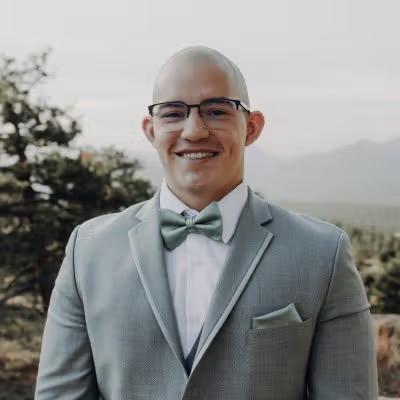
Tyler Morris is a Nutrition Science student on the pre-med track at Indiana University–Bloomington, where he is also minoring in Chemistry and serving as president of the School of Public Health–Bloomington Honors Program. His academic and professional interests include how health misinformation spreads, the psychology behind why people believe it, and strategies to strengthen critical thinking and media literacy. He plans to pursue a career in medicine and research while remaining actively engaged in science advocacy and communication.